
Elastoplastic analysis of internally pressurised bi-material sphere#
Highlights
Mesh a 3D geometry using Zmaster GUI
Create elsets using functions
Create the material file input using Zair GUI for different elsets
Create the input file using Zair GUI
Launch and visualize the results of a finite element computation
Compute the strain/stress components at the spherical coordinates
Problem specification#
The study proposed in this tutorial focuses on the analysis of a bi-material sphere under internal pressure. This sphere is subjected to a uniform internal pressure of \(P = 100 MPa\). The problem is 1-D axisymmetric in nature, but for demonstration purposes one eighth of the sphere is modeled here and symmetry planes are used.
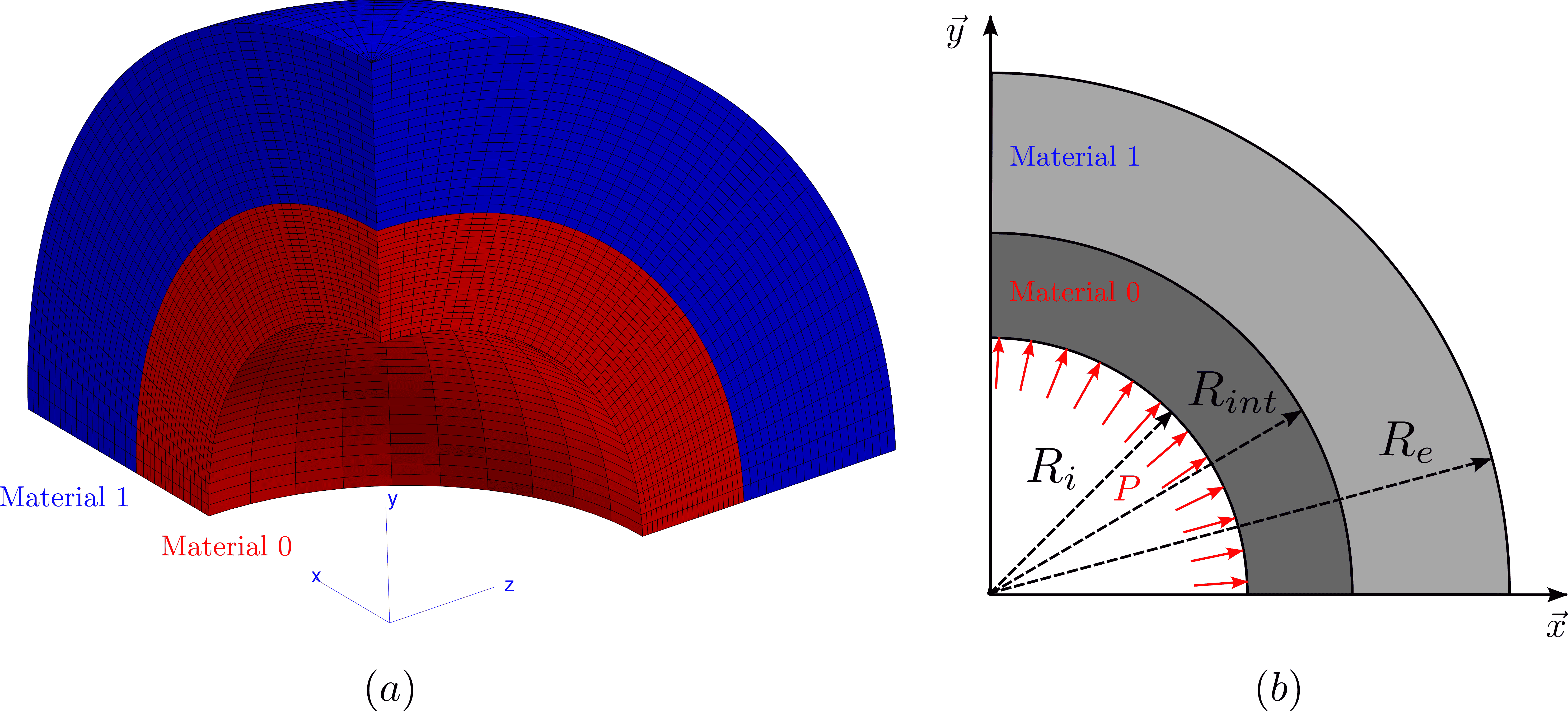
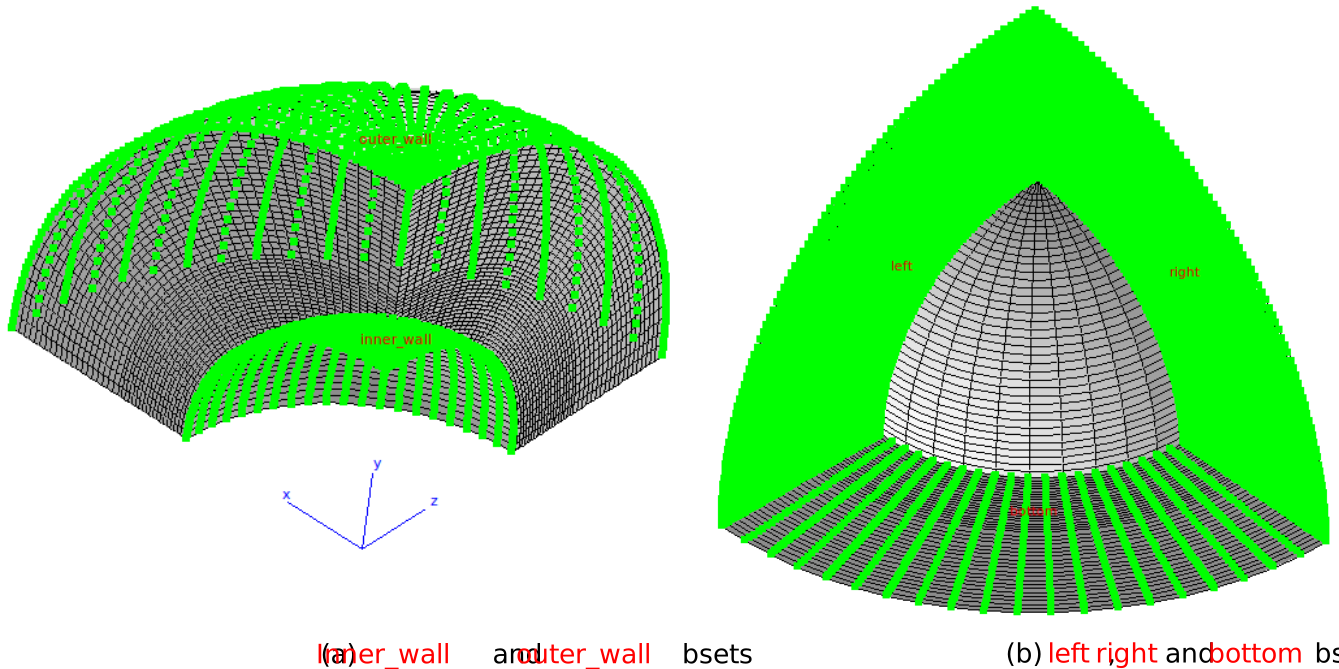
Fig. 46 One eighth of the bi-material sphere (a) sphere’s cross-section (b)#
Parameters |
Numerical value |
|---|---|
internal pressure |
100 MPa |
yield stress \(\sigma_0\) |
100 MPa |
inner radius \(R_i\) |
50 mm |
outer radius \(R_e\) |
100 mm |
interface radius \(R_{int}\) between materials |
70mm |
material 0 |
|
\(~\,~\,\) Young’s modulus |
20500 MPa |
\(~\,~\,\) Poisson’s coefficient |
0.3 |
\(~\,~\,\) density |
\(8.08\times 10^{-9}\) kg.mm\(^{-3}\) |
material 1 |
|
\(~\,~\,\) Young’s modulus |
205000 MPa |
\(~\,~\,\) Poisson’s coefficient |
0.3 |
\(~\,~\,\) density |
\(8.08\times 10^{-9}\) kg.mm\(^{-3}\) |
Analytical solution#
elastic/elastic composite
where
Mesh generation#
Geometry creation#
To create the sphere geometry with Zmaster:
Run the command
Zmaster sphere.mastin a terminal to open the Zmaster interface. This command will create a filesphere.mastin which the geometry will be stored in text form.Click on
 \(\longrightarrow\)
  to create the points that define the 2d geometry, which in this case is a quarter of a disk.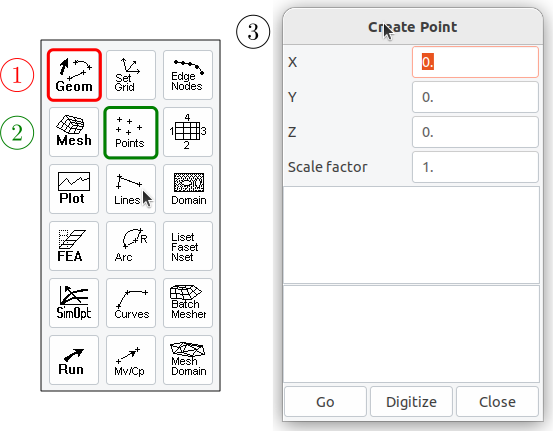
Enter the coordinates of a point (X, Y, Z), then click
GOto create the point. Repeat the process for all points.#Points X Y Z 1 50. 0. 0. 2 75. 0. 0. 3 100. 0. 0. 4 0. 100. 0. 5 0. 75. 0. 6 0. 50. 0. 7 0. 0. 0.
Click on
View,Auto-centerto view all points.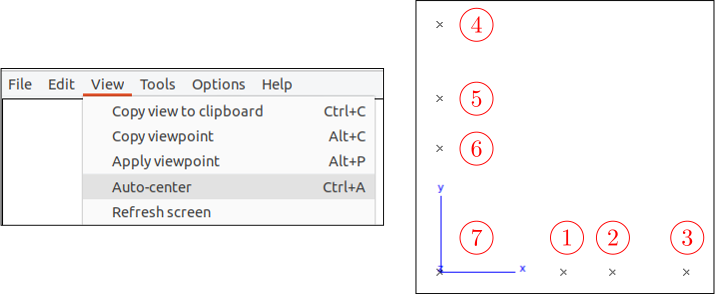
Click on
\(\longrightarrow\)  to create the lines connecting points 1 and 2, points 2 and 3, points 4 and 5, and points 5 and 6. Choose
 2 points, then clickGo. Click on points 1 and 2 to define line 1, which will be created. Next, click on points 2 and 3 to define line 2 and create it. Do the same for to create the other lines.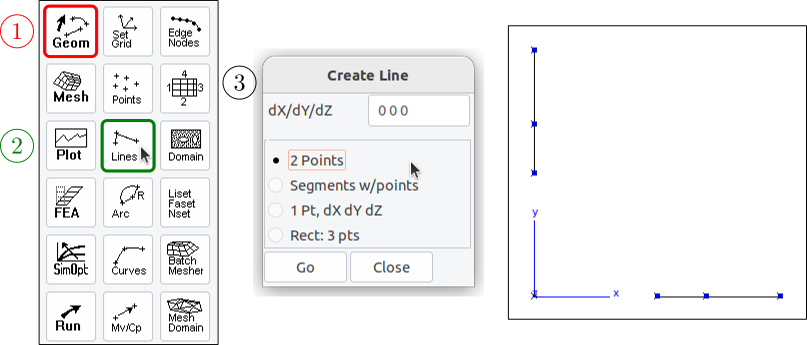
To create the inner and outer circular arcs, click on
\(\longrightarrow\)  . In the
 Create Arcwindow, selectArc: center, pt1, pt2to create the arcs using the center and two points, then confirm withOK. Click on the center point no. 7 (0,0,0) then point no. 1 and point no. 6 to create the inner arc. Click on the center point no. 7 (0,0,0) then point no. 2 and point no. 5 to create the arc that separate the two materials. Click on the center point no. 7 (0,0,0) then point no. 3 and point no. 4 to create the outer arc.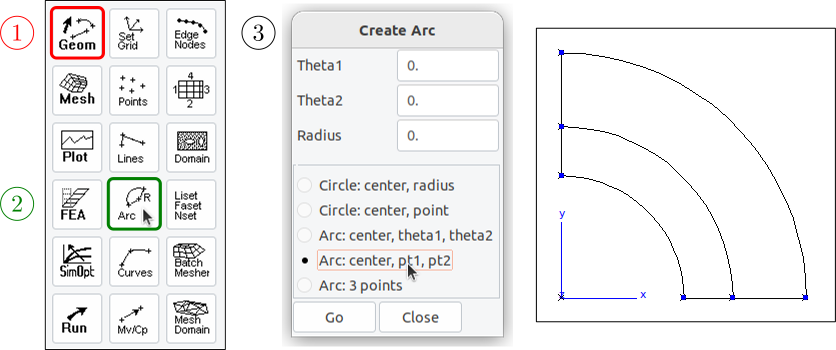
Save the progress by clicking on
File,Save.
Note
All these steps help to populate the
sphere.mastfile. If you open it with a text editor, you will notice that there is a section for each created entity (points, lines, arcs).You can achieve the same result by writing the keywords for each entity and opening it with the command
Zmaster sphere.mastto see the result.You can modify the properties of the created entities directly in the
sphere.mastfile, for example, it is possible to change the coordinates of the points, the radii of the arcs, etc.
The content of the sphere.mast file:
****master
 ***geometry
  **point point0
   *position 0.000000000000000e+00 0.000000000000000e+00 0.000000000000000e+00
  **point point1
   *position 5.000000000000000e+01 0.000000000000000e+00 0.000000000000000e+00
  **point point2
   *position 7.000000000000000e+01 0.000000000000000e+00 0.000000000000000e+00
  **point point3
   *position 1.000000000000000e+02 0.000000000000000e+00 0.000000000000000e+00
  **point point4
   *position 0.000000000000000e+00 1.000000000000000e+02 0.000000000000000e+00
  **point point5
   *position 0.000000000000000e+00 7.000000000000000e+01 0.000000000000000e+00
  **point point6
   *position 0.000000000000000e+00 5.000000000000000e+01 0.000000000000000e+00
  **line line0
   *p1 point1
   *p2 point2
  **line line1
   *p1 point2
   *p2 point3
  **line line2
   *p1 point4
   *p2 point5
  **line line3
   *p1 point5
   *p2 point6
  **arc arc0
   *p1 point1
   *p2 point6
   *center point0
   *data   5.000000000000000e+01 0.000000000000000e+00 1.570796326794897e+00
  **arc arc1
   *p1 point2
   *p2 point5
   *center point0
   *data   7.000000000000000e+01 0.000000000000000e+00 1.570796326794897e+00
  **arc arc2
   *p1 point3
   *p2 point4
   *center point0
   *data   1.000000000000000e+02 0.000000000000000e+00 1.570796326794897e+00
 ***plotting
  **default_options 1 0 1
****return
Structure meshing#
To mesh the previously created geometry, follow these steps:
If the Zmaster interface is closed, open the geometry file using the command
Zmaster sphere.mast.Start by specifying the desired number of nodes on the geometry boundaries (inner and outer) by clicking on
\(\longrightarrow\)  , and entering the desired number of nodes for each boundary. Each pair of opposite sides must have the same number of nodes (for example, 20 radially on each line and 40 circumferentially on each arc).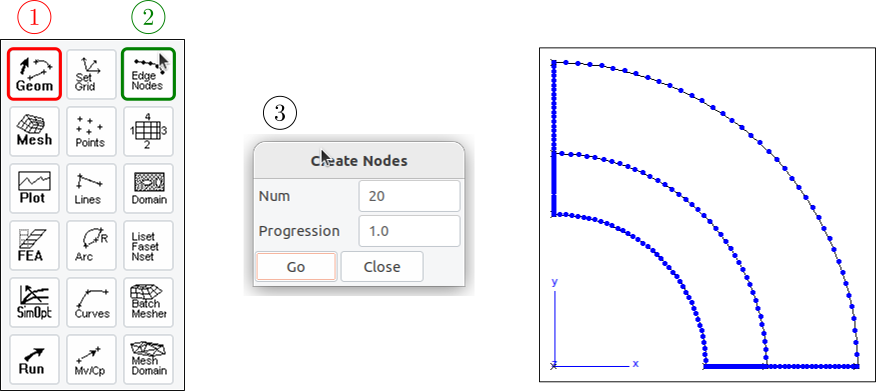
Before meshing the quarter of the disk, you must choose the desired mesh type: structured or free. In this case a
structured meshhas been used:Click on
\(\longrightarrow\)  .
.Choose the element group name
Elset, element type (cax), linear or quadratic elementsQuadratic, normal or reduced integrationNormaland, since the mesh contains two linear sides,Sides 2 4 linear.Click
Start, then select the boundaries in an order such that the lines are numbered 2 and 4 (for example, in this order: 1-inner arc, 2-line #1, 3-outer arc, and 4-line #2) for the two domains \(R0\) and \(R1\) correspond to material_0 and material_1, respectively.Click on
\(\longrightarrow\)  to mesh the geometry.
Click on
 to show the mesh.
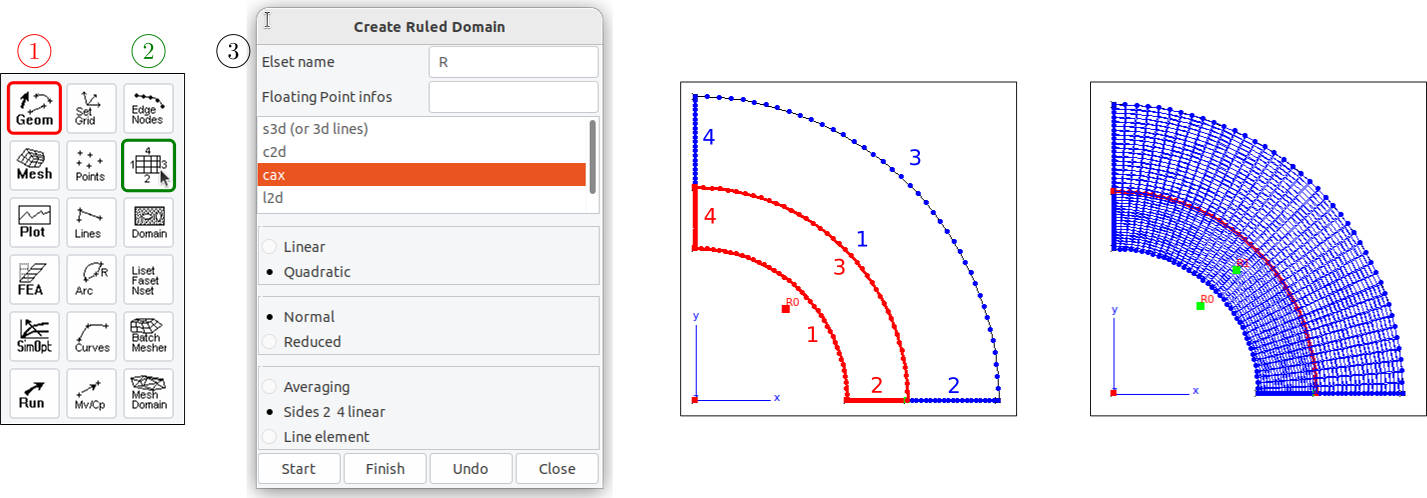
To create a 3D mesh which is an extend of the planar 2D mesh around the axis
ythrough a sweep rotation.Click on
\(\longrightarrow\)  , then on
 sweep.Enter the
angleto sweep through in degrees,numis the number of elements in the extension direction and then confirm withOK.Click on
\(\longrightarrow\) to mesh the geometry.Click on
to show the mesh.
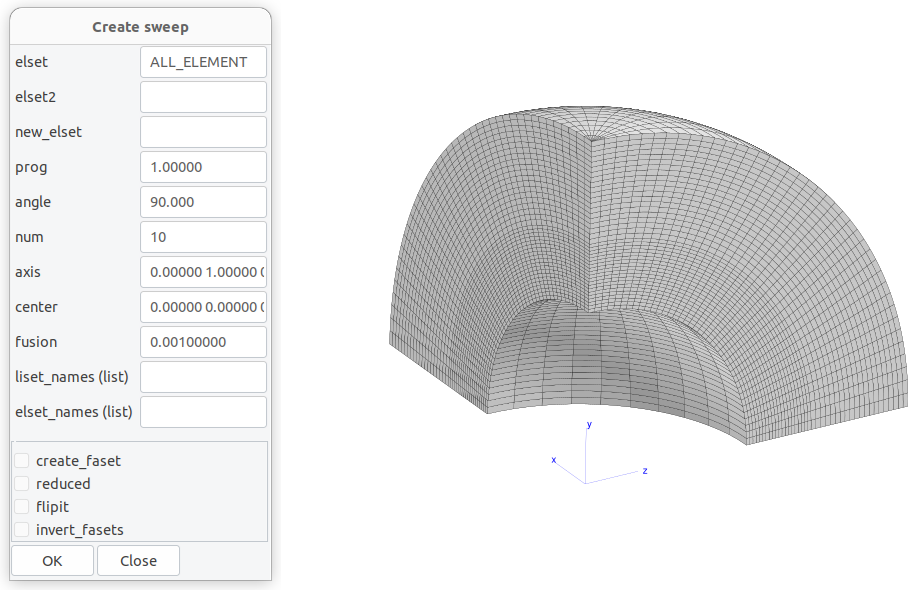
Note
All these steps populate the
sphere.mastfile and create asphere.geoffile, which contains all the nodes and elements of the created mesh.If you open the
sphere.mastfile with a text editor, you will notice that additional sections have been added, defining the meshing domain and the type of mesh (structured or free) and the number of nodes in each entity: lines (*cuts 20) and arcs (*cuts 40).You can obtain the mesh file
sphere.geofby adding the previous sections and running the commandZrun -B sphere.mastin a terminal.You can modify the mesh characteristics in
sphere.geofdirectly from thesphere.mastfile; for example, it is possible to change the number of nodes for each entity with (*cuts 20), the type of elements, etc. Then, run the commandZrun -B sphere.mastto create the mesh in thesphere.geoffile.
The content of the sphere.geof file:
***geometry
 **node
  70161 3
  1 -1.914284349463475e-14 5.000000000000000e+01 0.000000000000000e+00
  2 9.816846230313904e-01 4.999036202410324e+01 0.000000000000000e+00
  …
 **element
  16000
  1 c3d15 7 6 5 9842 4965 4966 8 4 4964 1 2 3 9843 4963 4962
  2 c3d20 3 9 10 11 12 13 5 4 9843 9845 9844 9842 4963 4967 4968 4969 4970 4971 4965 4964
  3 c3d20 10 14 15 16 17 18 12 11 9845 9847 9846 9844 4968 4972 4973 4974 4975 4976 4970 4969
  …
***group
 **elset R0
  1 2 3 4 5 6 7 8 9 10 11 12 13 14 15 16 17 18 19 20 21
  …
***return
Creation of nsets or bsets#
It will be useful to create groups of nodes (nsets), boundary groups (bsets) to apply boundary conditions or to plot stress along a line, for example, to easily apply boundary conditions, boundary groups will be created.
a) Using mouse selection :
The steps to define nsets and bsets :
Click on
\(\longrightarrow\)  .
Enter the name of the nset, choose the selection type
.
Enter the name of the nset, choose the selection type Node Sets/Faset by face, selectCreate nsetandCreate fasetand then click onStart. Select one faset on the boundary forming the nset. Click on the bottomExtend. Confirm withFinish. Without closing the tab, repeat this operation for as many nsets as needed.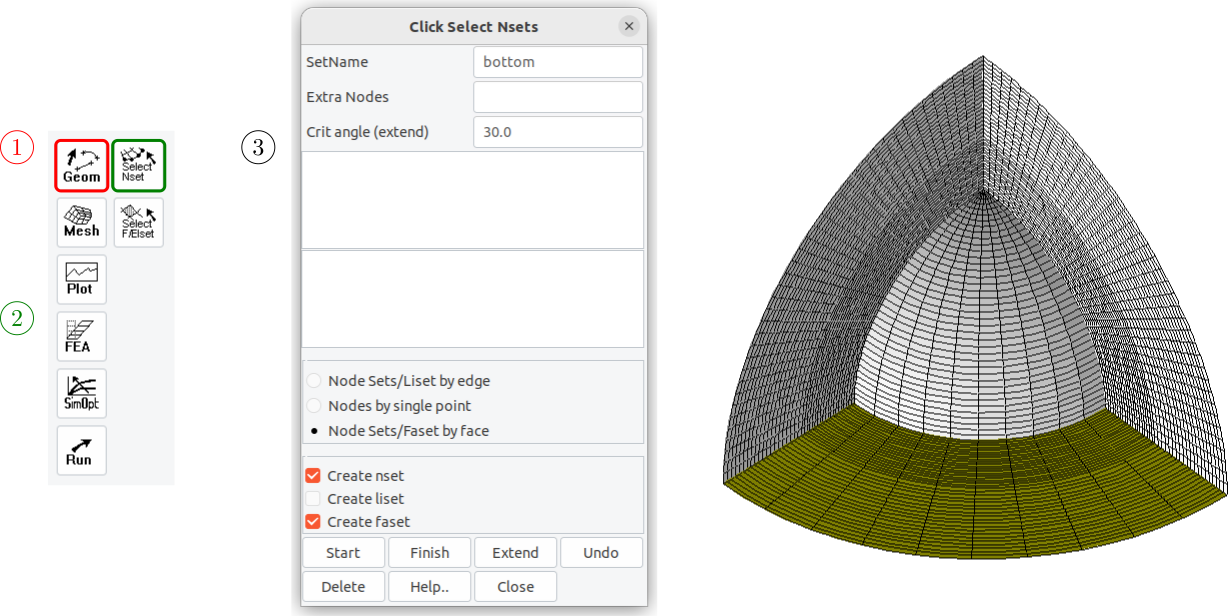
Save the mesh using
File\(\longrightarrow\)Save.In order to view the nsets, bset and the elsets, click on
, a window will open that
contain three list :the first is for the
nsets,the second is for the
bsets,the third is for the
elsets.
Select the entity to view and then click on
Draw.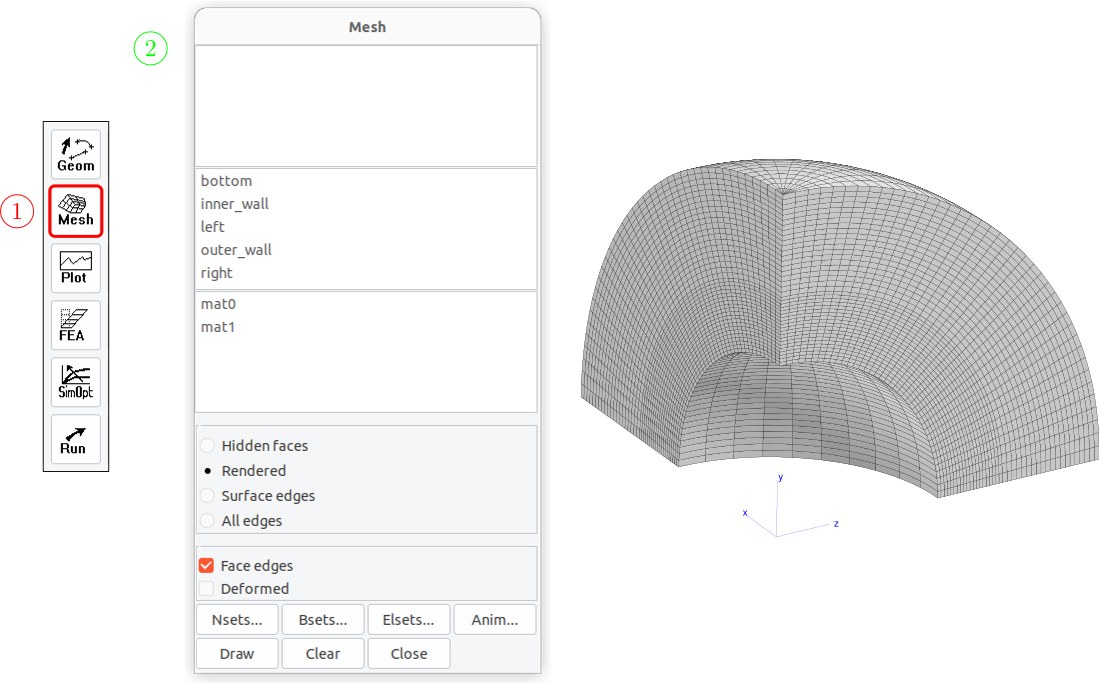
b) Using functions :
Display details
Functions used to define the Bsets :
==========  =======================
Bsets       Definition
==========  =======================
inner_wall  x*x+y*y+z*z<50.*50.+0.001
outer_wall  x*x+y*y+z*z>100.*100.-0.001
right       x<0.001
bottom      y<0.001
left        z<0.001
==========  =======================
The steps to define nsets and bsets from bsets :
Click on
\(\longrightarrow\) , then on bset. Enter the name of the bset, the function defining the bset, and then confirm withOK.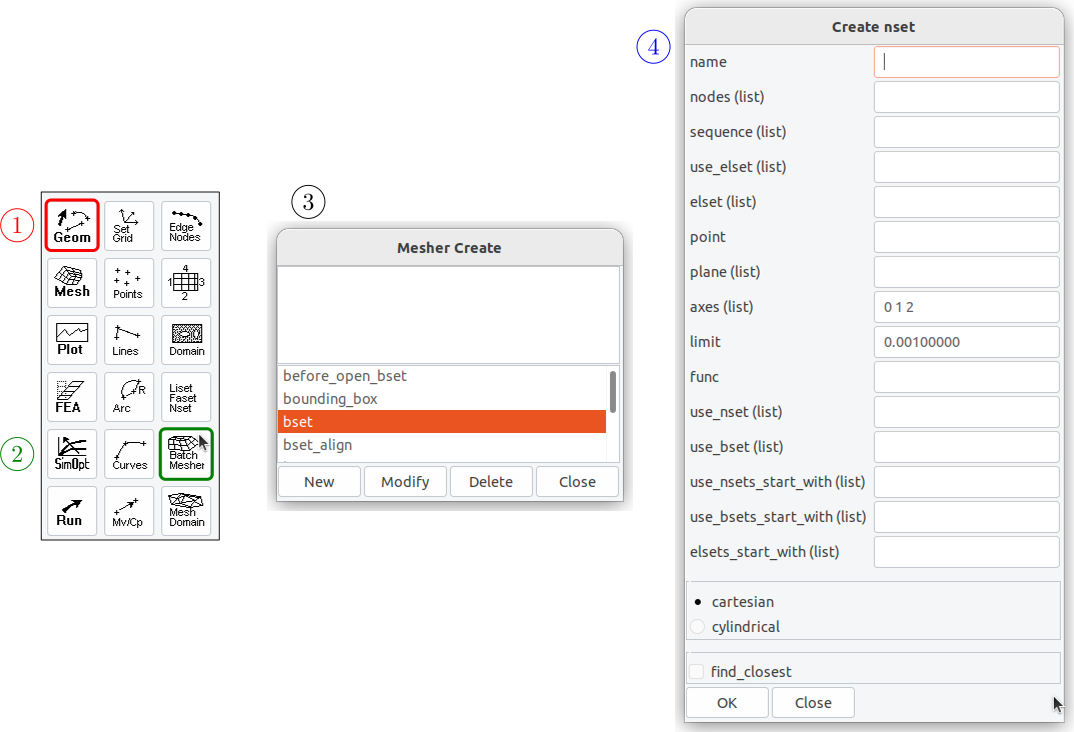
Repeat this operation for as many bsets as needed.
Click on
\(\longrightarrow\) , then save the mesh using File\(\longrightarrow\)Save.
Note
If you open the file
sphere.mastwith a text editor, you will notice that there are additional sections that have been added, defining the nsets, bsets, or elsets.If you want to modify this part using a text editor, for example, the function for an bset, simply use the command
Zrun -B sphere.mastto create the new nsets and bsets or elsets.
The additional sections in the sphere.mast file:
***mesher
 **sweep
   *elset ALL_ELEMENT
   *prog 1.00000
   *angle 90.0000
   *num 10
   *axis ( 0.00000 1.00000 0.00000 )
   *center ( 0.00000 0.00000 0.00000 )
   *fusion 0.00100000
 **bset
   *type cartesian
   *name inner_wall
   *axes 0 1 2
   *limit 0.00100000
   *func x*x+y*y+z*z<50.*50.+0.001;
   *use_dimension 3
   *req_number -1
 **bset
   *type cartesian
   *name outer_wall
   *axes 0 1 2
   *limit 0.00100000
   *func x*x+y*y+z*z>100.*100.-0.001;
   *use_dimension 3
   *req_number -1
 **bset
   *type cartesian
   *name right
   *axes 0 1 2
   *limit 0.00100000
   *func x<0.001;
   *use_dimension 3
   *req_number -1
 **bset
   *type cartesian
   *name left
   *axes 0 1 2
   *limit 0.00100000
   *func z<0.001;
   *use_dimension 3
   *req_number -1
 **bset
   *type cartesian
   *name bottom
   *axes 0 1 2
   *limit 0.00100000
   *func y<0.001;
   *use_dimension 3
   *req_number -1
Creation of elsets#
In the general case, it is needed to define some particular element groups (elsets) for
the needs of the FE analysis.
To define these elsets, it is possible to use function as follows written in a
mesher.inp file:
****mesher
 ***mesh sphere.geof
   **open sphere.geof

   **elset mat0         % elset for material 0
    *func x*x+y*y+z*z<70.*70.+0.001;

   **elset mat1         % elset for material 1
    *func x*x+y*y+z*z>70.*70.-0.001;

 ****return
To launch the mesher use the command Zrun -m mesher.inp, a mesh file named
sphere.geof will be replaced. Use the command Zmaster sphere.geof
to visualize the new mesh with new elsets.
In order to view nsets, bsets and elsets, click on
, a window will open that contain three list :the first is for the
nsets,the second is for the
bsets,the third is for the
elsets.
Select the entity to view and then click on
Draw.

Finite element analysis#
Problem definition#
The problem definition, solution method, boundary conditions, and loads are defined in the sphere.inp file using an Auto_reader interface.
Type the command
Zmaster sphere.inpin a terminal to create the file where the problem data will be stored.Click on
Options,thenAuto reader.A window containing the interface will open.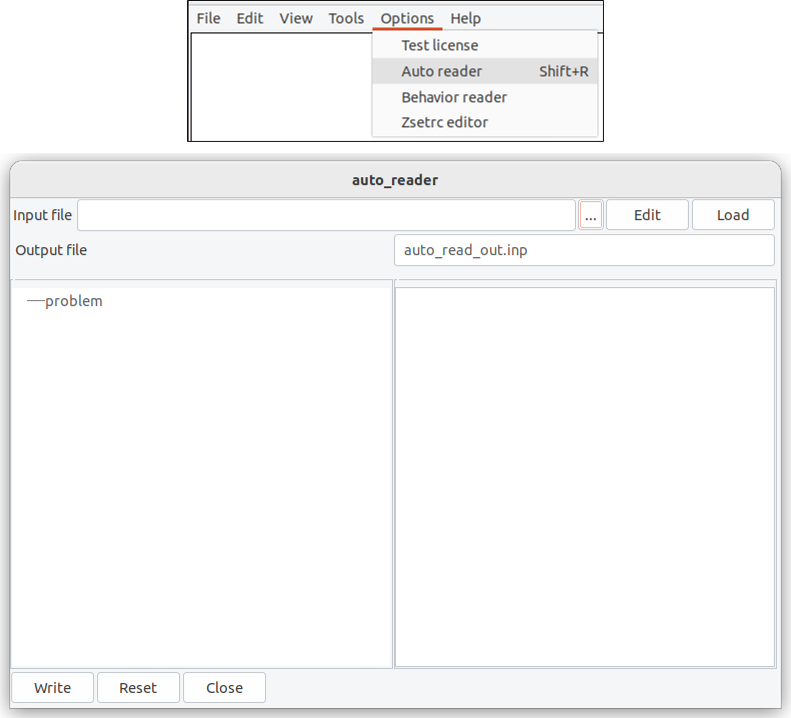
Click on
problem,useFilter selectionto search forcalcul_mechanical,then select this option and confirm withSet.A tree structure will open belowproblem,containing all the parameters for defining a mechanical calculation.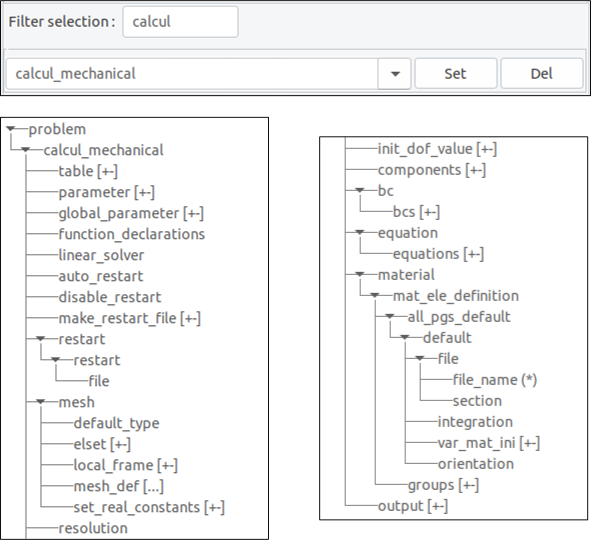
Start by defining the mesh that will be used by clicking on
mesh_def [...]undermesh,selectfile,and confirm withSet.Click onfilethat will appear undermesh_def [...]and enter the name of the mesh file, then validate withOpen.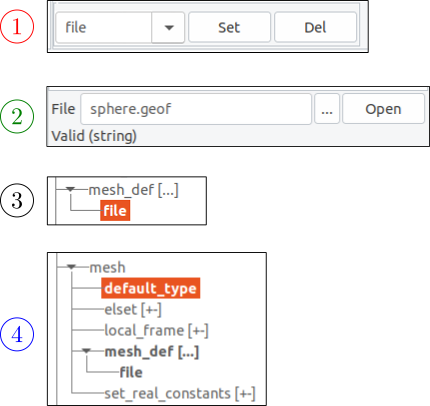
Click on
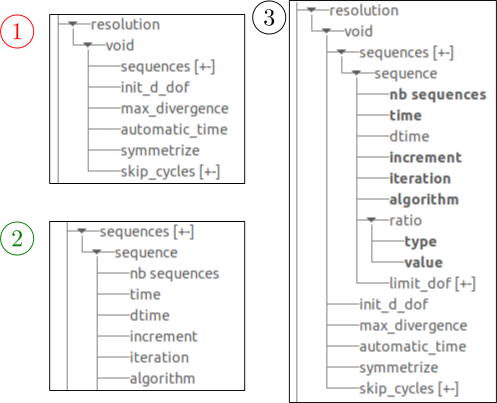
resolutionto define the parameters of the solution algorithm. Selectvoidand confirm withSet.A tree structure will appear undervoidandresolution.Click onsequences [+-],choosesequence,then click onAddand enter the following values for the different parameters undersequence:nb sequences=> 1time=> 1.0increment=> 5iteration=> 10algorithm=> p1p2p3 (update tangent stiffness at each iteration)ratio:type=> relative (default): residual divided by the norm of external reactionvalue=> 1.e-06symmetrize=> True
To define the boundary conditions and loads applied to the structure, click on
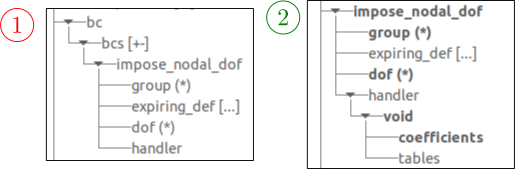
bcs [+-],chooseimpose_nodal_dofusingFilter selection,and confirm withAdd. Select the options below to constrain the displacement on therightnset in the vertical direction:group (*)=> rightdof (*)=> U1handler=>void=>coefficients=> 0.0
Select the options below to constrain the displacement on the
bottomnset in the vertical direction:group (*)=> bottomdof (*)=> U2handler=>void=>coefficients=> 0.0
Select the options below to constrain the displacement on the
leftnset in the horizontal direction:group (*)=> leftdof (*)=> U3handler=>void=>coefficients=> 0.0
To define the loads applied to the structure, click on
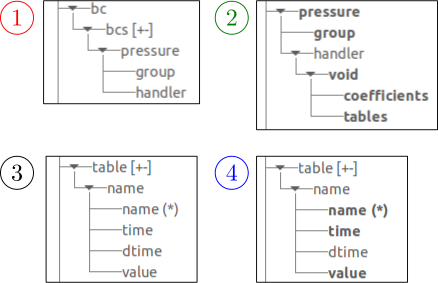
bcs [+-],and choosepressure.Select the options below to apply the load on the
inner wallnset in the vertical direction:group (*)=> inner_wallhandler=>void:coefficients=> -100.0tables=> tab
Click on
table [+-],choosename,and confirm withAdd.A tree structure will appear undertables,allowing you to define the evolution of the load over time in thetabtable. Select the options below:name=> tabtime=> 0.0 1.0value=> 0.0 1.0
Add the previously created material file
mat0.matfor the elsetmat0by clicking ongroups[+-]and adding a new elset. Click onfile_name (*)underfileandmaterial, click on...and select themat0.matfile, then confirm withOpentwice. So the same steps to add the material filemat1.matfor the elsetmat1.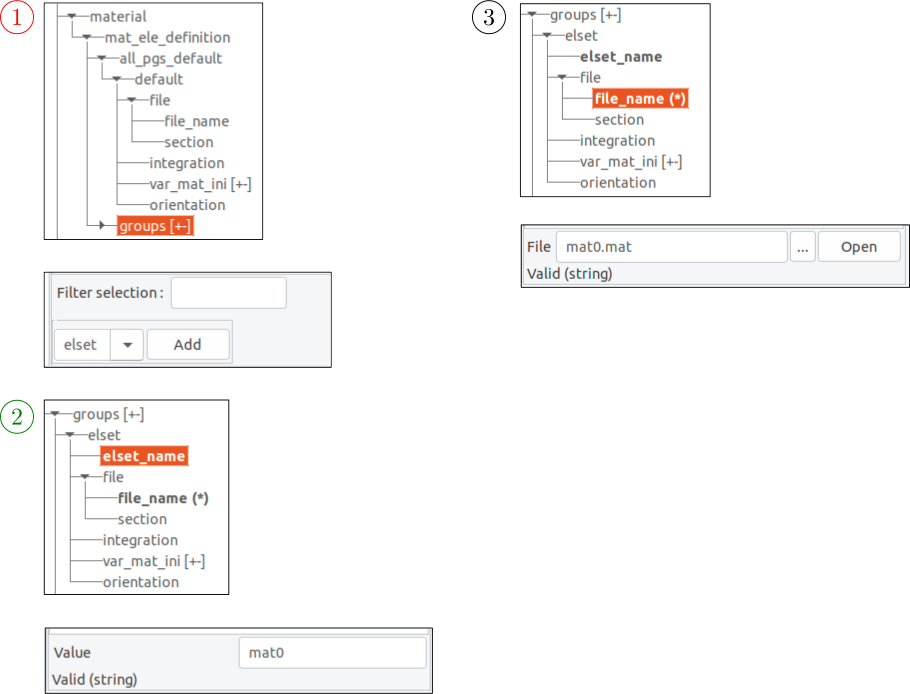
Save the problem definition by specifying the file name
sphere.inpand clicking theWritebutton. Asphere.inpfile will be created containing the problem data.
The content of the sphere.inp file:
****calcul
 ***table
   **name tab
     *time 0.00000 1.00000
     *value 0.00000 1.00000
 ***mesh
   **file sphere.geof
 ***resolution
   **sequence 1
     *time 1.00000
     *increment 5
     *iteration 10
     *algorithm p1p2p3
     *ratio 1.00000e-06
   **symmetrize
 ***bc
   **pressure
     inner_wall  -100.0000 tab
   **impose_nodal_dof
     right  U1  0.00000
     bottom U2  0.00000
     left   U3  0.00000
 ***material
   **elset mat0
     *file mat0.mat
  **elset mat1
     *file mat1.mat
****return
Material behavior#
To assign an elastic material to elset \(R_0\) of the created mesh, follow these steps:
Click on
Options, thenBehavior reader. A window opens allowing you to define the material.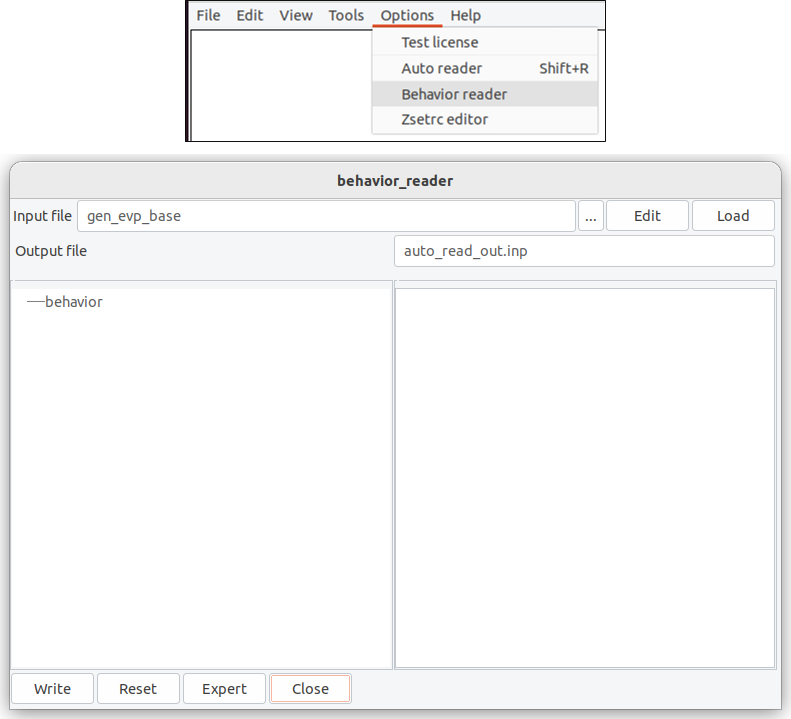
Modify the name of the
output fileby entering something likematerial1.mat. Choosegen_evpand click onSet. A tree structure will appear on the left side containing the various parameters to define.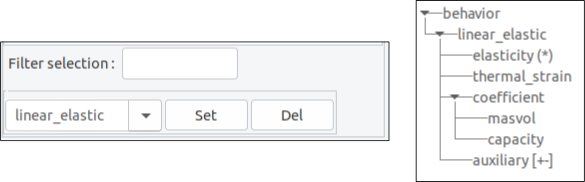
Select
elasticityfrom the tree structure, then choose the type of elasticity, for example,isotropic. Then, click onSet. The Young’s modulus and the Poisson’s ratio will be added to the tree structure underisotropicandelasticity.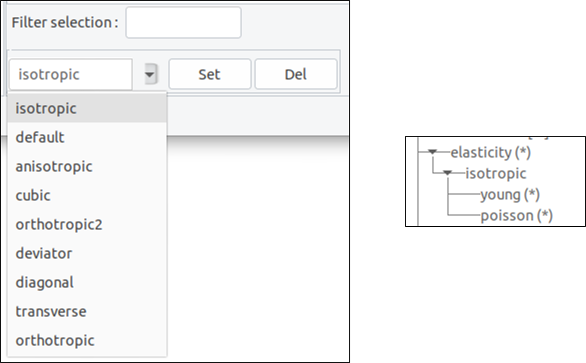
Click on
young(*)to define the Young’s modulus, then choose the application method for the modulus, such as constant, and confirm withSet.Constantwill be added belowYoung. By clicking onconstant,the value can be defined.
The Poisson’s ratio is defined in the same way, with a value of 0.3.
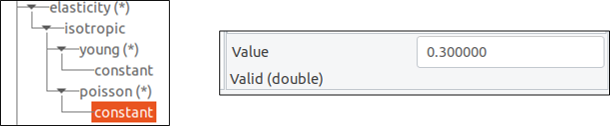
To define the material’s density, simply click on the parameter
masvolbelowcoefficient,then chooseconstant,confirm withSet,and finally enter the coefficient value as 8.08000e-09.
Specify the name of the file to something more descriptive, like
material0.mat.in theOutput filesection, then save the material behavior by clicking theWritebutton. A file namedmaterial0.matwill be created in the same folder.
To assign an elastoplastic material with linear isotropic hardening to elset \(R_1\) of the created mesh, follow these steps:
Click on
Options, thenBehavior reader. A window opens allowing you to define the material.
Modify the name of the
output fileby entering something likematerial1.mat. Choosegen_evpand click onSet. A tree structure will appear on the left side containing the various parameters to define.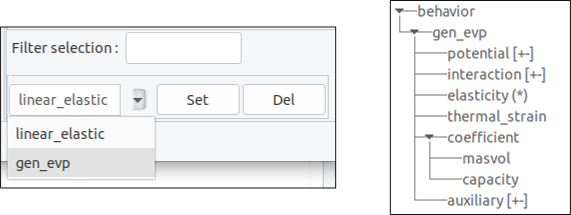
Select
elasticityfrom the tree structure, then choose the type of elasticity, for example,isotropic. Then, click onSet. The Young’s modulus and the Poisson’s ratio will be added to the tree structure underisotropicandelasticity.
Click on
young(*)to define the Young’s modulus, then choose the application method for the modulus, such as constant, and confirm withSet.Constantwill be added belowYoung. By clicking onconstant,the value can be defined.
The Poisson’s ratio is defined in the same way, with a value of 0.3.
To define the material’s density, simply click on the parameter
masvolbelowcoefficient,then chooseconstant,confirm withSet,and finally enter the coefficient value as 8.08000e-09.
To achieve elasto-plastic behavior, start by defining the
potentialby clicking on it, choosegen_evpfrom the list, and then click onAdd.The potentialgen_evpwill be added to the tree structure.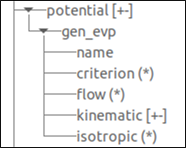
You need to define the new parameters under
gen_evp:name=> ‘ep’,criterion (*)=> ‘mises’ and confirm withSet,flow (*)=> ‘plasticity’ and confirm withSet,isotropic=> ‘linear’,R0=> ‘constant’ => ‘100.0’,H=> ‘constant’ => ‘2000.0’
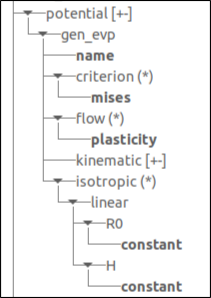
Specify the name of the file to something more descriptive, like
material1.mat, in theOutput filesection. Then, save the material behavior by clicking theWritebutton. A file namedmaterial1.matwill be created in the same folder.
Note
All the parameters that have been defined are saved in the files
material0.matandmaterial1.mat.It is possible to define the material behavior directly without using the interface by entering the keywords and parameter values in this file with a text editor.
You can load a material file in the
Behavior_readerinterface by clicking on...to select the file to load, then confirm withOpen,and finally click onLoad.
The content of the material0.mat file:
***behavior linear_elastic
 **elasticity isotropic
   young  205000.
   poisson  0.300000
 **coefficient
   masvol  8.08000e-09
***return
The content of the material1.mat file:
***behavior gen_evp
 **potential gen_evp ep
  *criterion mises
  *flow plasticity
  *isotropic linear
   R0  100.
   H   2000.
 **elasticity isotropic
   young  205000.
   poisson  0.300000
 **coefficient
   masvol  8.08000e-09
***return
Note
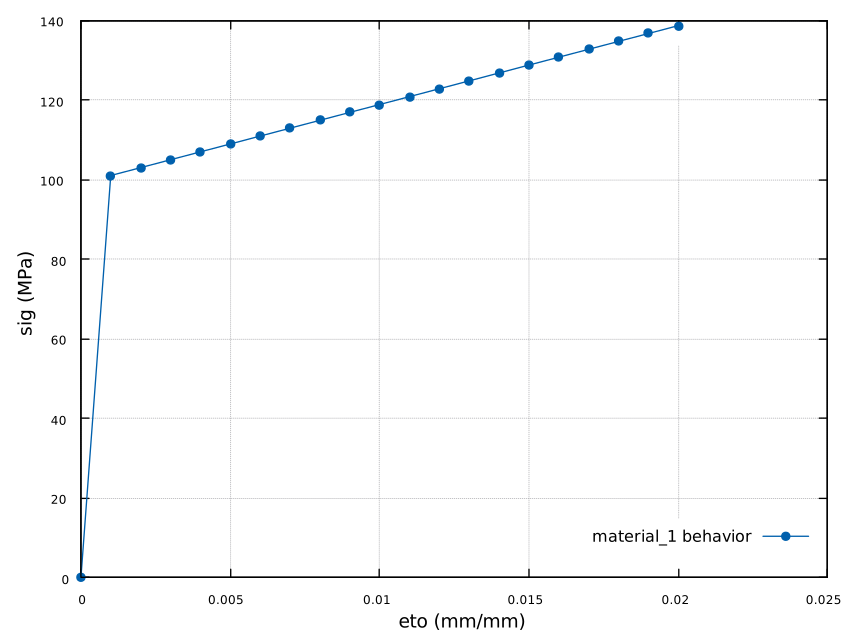
You can plot the stress-strain curve by using the command Zsim material1.mat in a terminal
in the same location as the material1.mat file.
Resolution#
Click on
 , a window will open containing the command
 Zrun sphereand selectFinite element, then click onGoto start the calculation.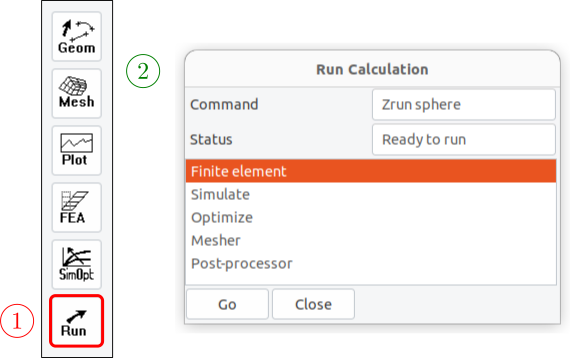
It is also possible to start the calculation using a terminal by entering the following command:
Zrun sphere.inp.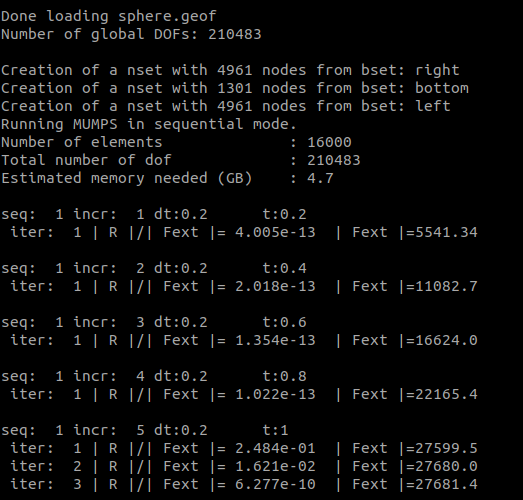
Post-processing#
Post-processing of results in a spherical local coordinate system:
In order to get stress values in the spherical coordinates, one can use the following post-processing by adding it at
the end of the sphere.inp and use the terminal command Zrun -pp sphere.inp to run it:
****post_processing
 ***global_post_processing
  **file integ
  **output_number 1-5
  **process transform_frame
   *local_frame spherical
    (0. 0. 0.)
   *tensor_variables sig
   *tensor_variables eto
****return
Results & discussions#
To display the results:
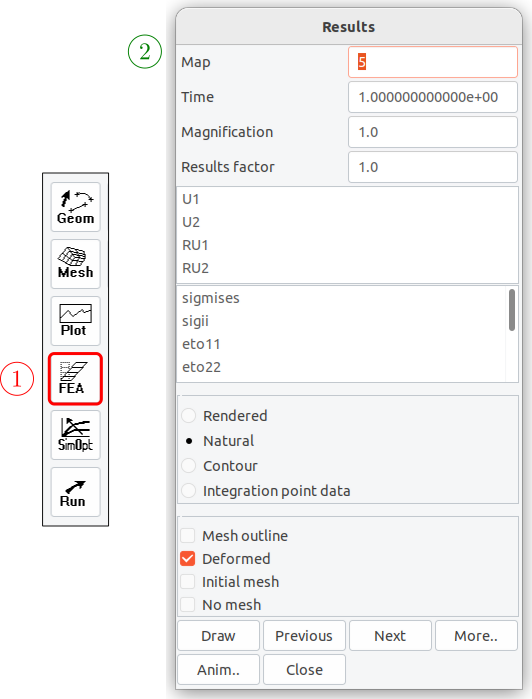
Click on
 , a
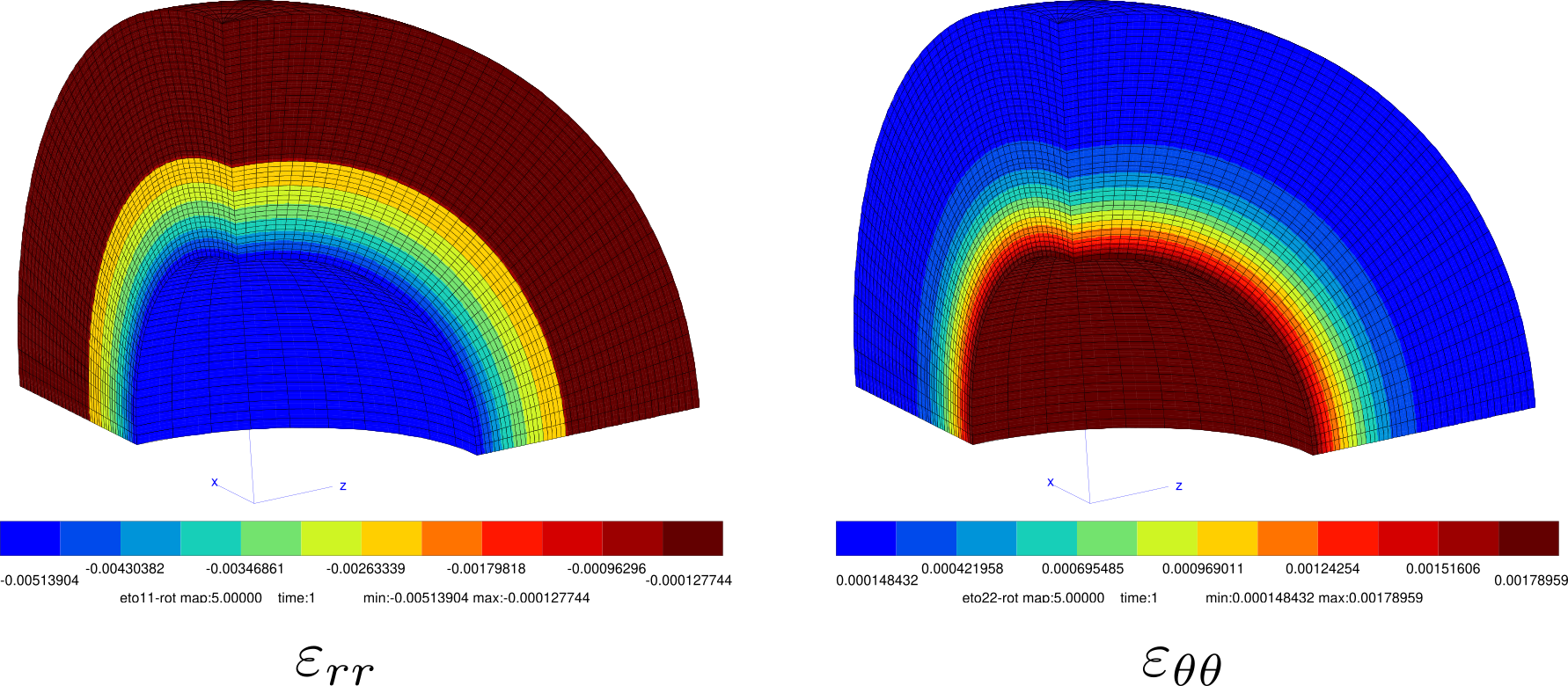
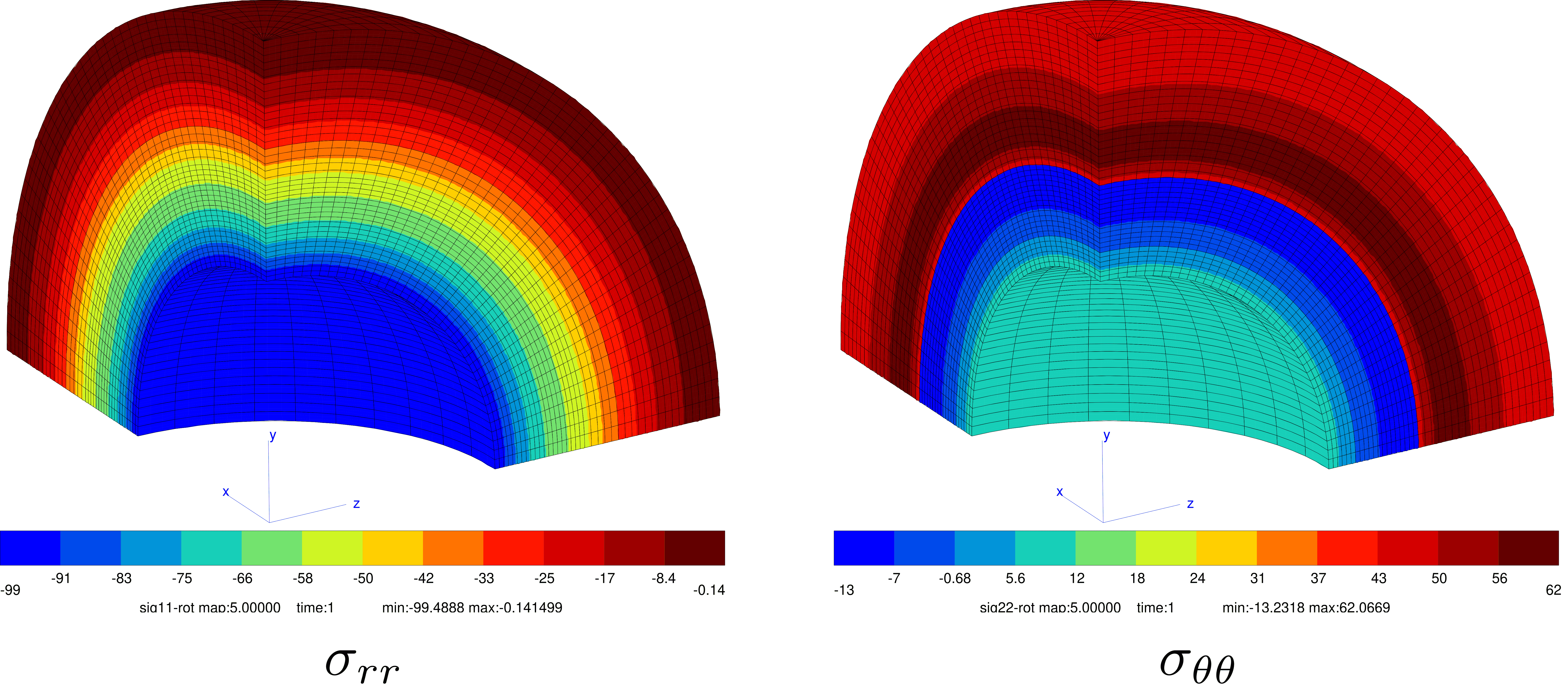
, a Resultswindow will appear containing displacements (U1, U2), reaction forces (RU1, RU2), which are node results. It also includes stresses (sigmises, sig11, sig22, etc.) and strains (epcum, eto11, eto22, etc.) which are results calculated at Gauss points.Select the result you wish to display, then click
Drawor double-click to display the desired result on the mesh.
Some examples of calculation results:
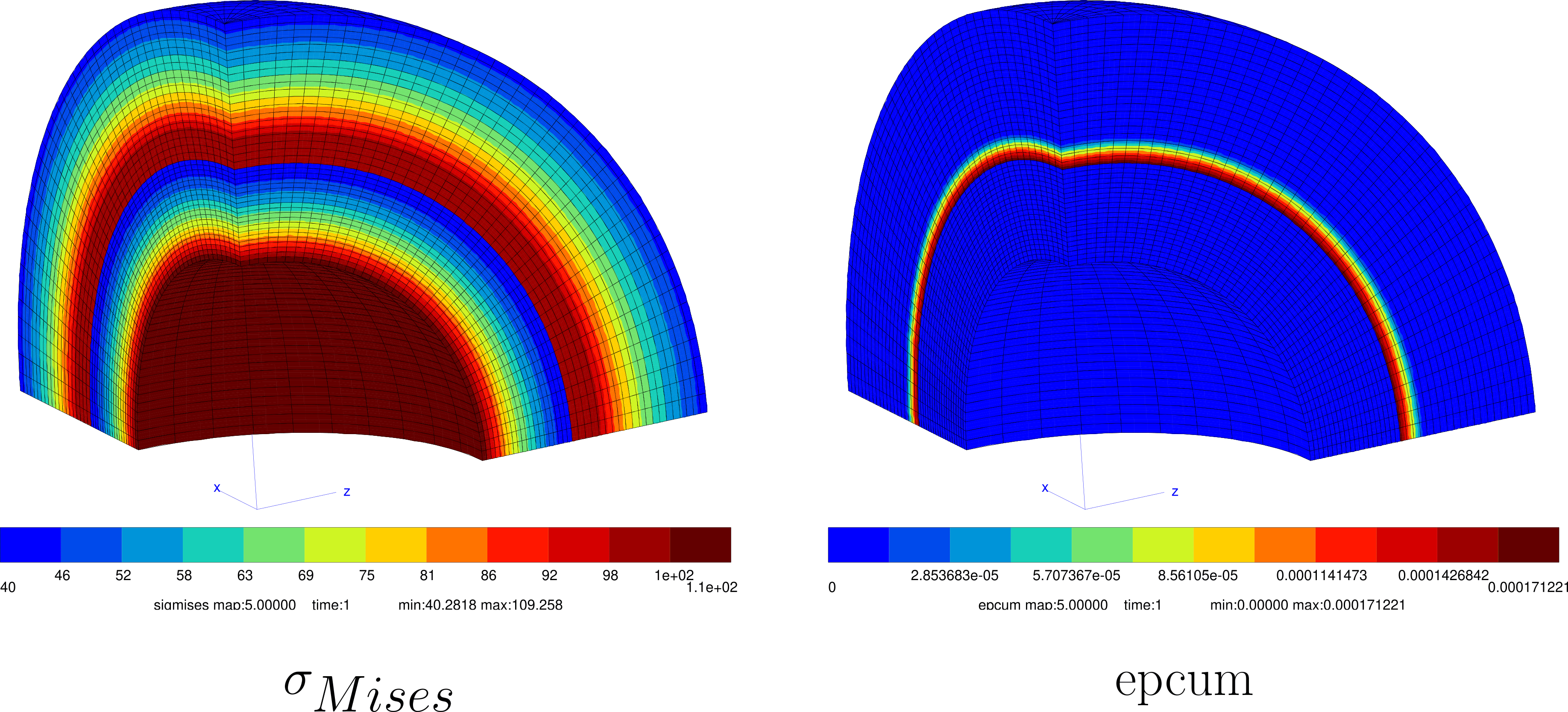
Strain Results:
Stress Results:
Downloads
Mesh files
Input files
Material files